
Related items loading ...
Publication Type
Journal Article
Authorship
Wang, T., Tang, G.
Title
Spatial Variability and Linkage Between Extreme Convections and Extreme Precipitation Revealed by 22-Year Space-Borne Precipitation Radar Data
Year
2020
Publication Outlet
Wiley Online Library, AGU, Geophysical Research Letters, Volume47, Issue12 28 June 2020 e2020GL088437
DOI
Abstract
Based on unprecedented 22-year records from the Tropical Rainfall Measuring Mission (TRMM) precipitation radar (PR) and the Global Precipitation Measurement (GPM) dual-frequency precipitation radar (DPR), this study aims to investigate the global distribution and linkage between both convections and precipitation extremes quasi-globally. Overall, the spatial distributions of extreme events show significant regional variability and land-ocean contrast. Extreme precipitation is dominant over tropical ocean while extreme convections are exclusive over land from tropics to higher latitude. Besides, there are strong positive relationships between extreme convections and precipitation based on multiple threshold-based definitions of extremes, which provides more consistent physical properties of extreme events globally. The correlation is significant over land but relatively weak over oceans. Seasonal occurrences of extreme events are also examined. Furthermore, extreme events exhibit notable diurnal characteristics over global land with most extreme convections occurring in the afternoon, while diurnal cycles are more homogeneous over ocean.
 Legacy sites
 Create a New Record
 Alias List Editor
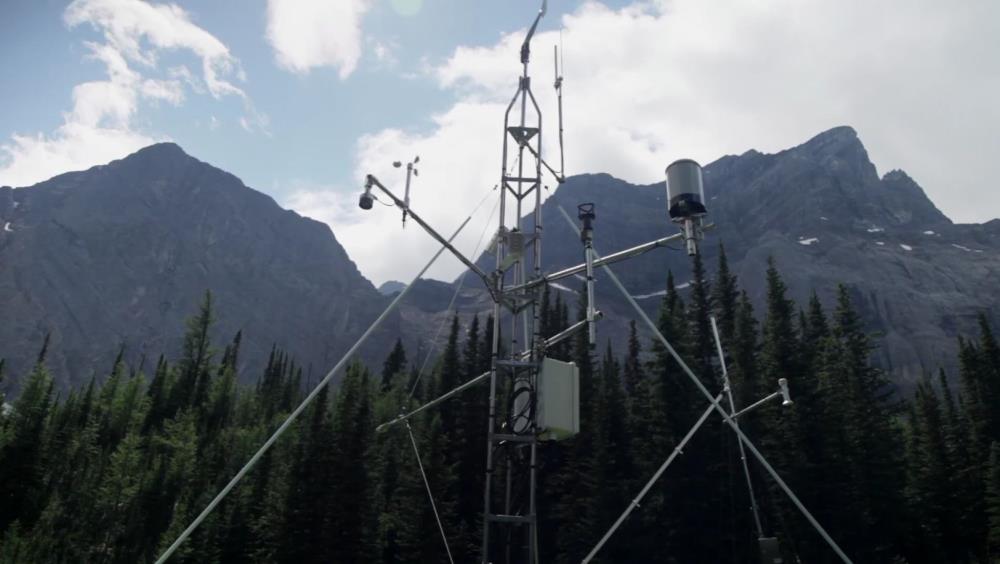


 GWFO
GWFO Catalogue
 Data
Data Collections
 Websites
 Map
Map
 Utilities
 . . .
. . .